
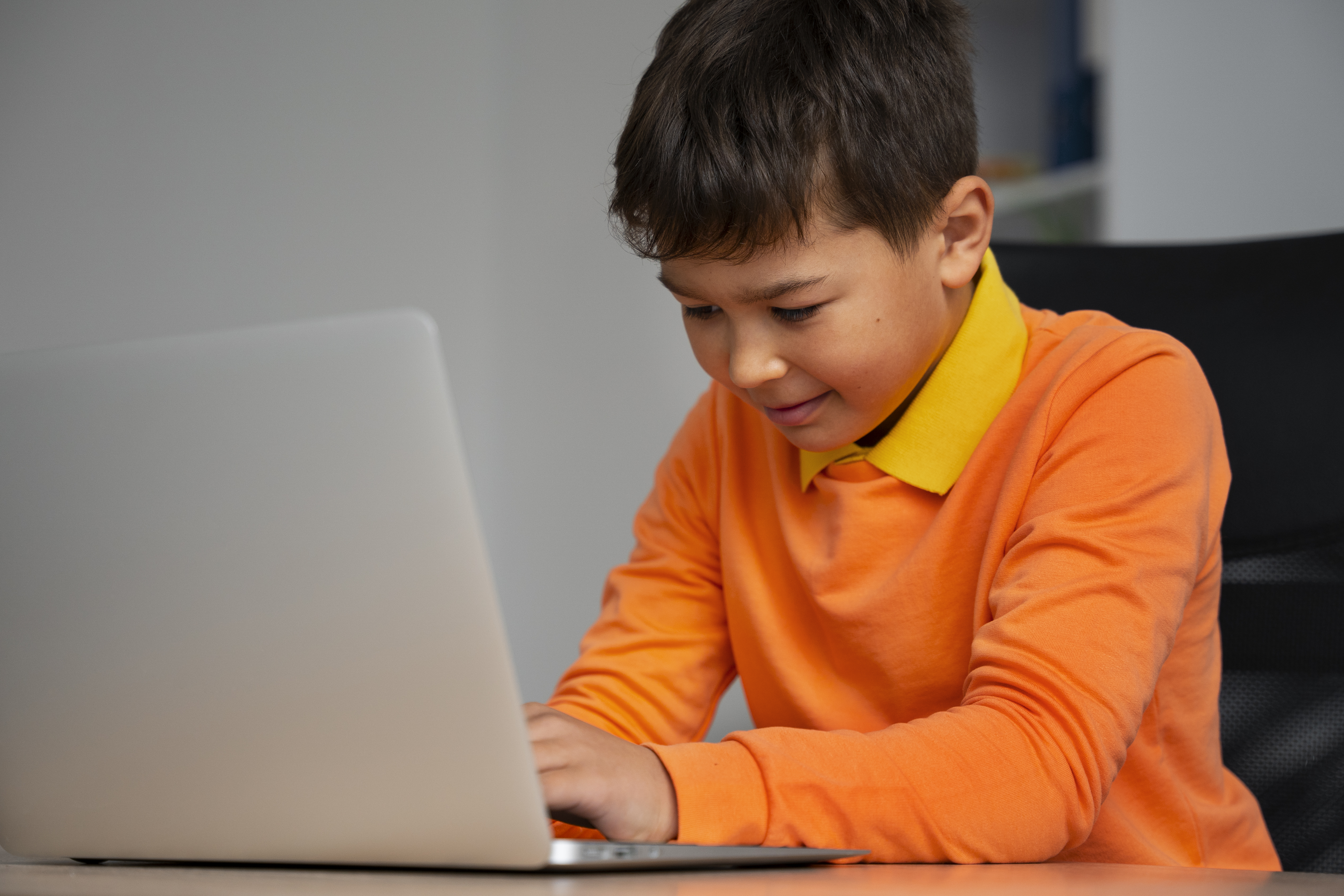
Most parents assume Python is the destination and block coding is just the on-ramp. It's not that simple. The right time to switch depends on one thing — and it's not your child's age.
Every week, a parent asks us some version of the same question: my child has been doing block coding for a while now — should they move to Python? The question sounds simple. The answer isn't. And getting it wrong — rushing too early or waiting too long — can quietly kill a child's enthusiasm for coding entirely.
At ScienceUtsav, our Coding track starts every student with visual block-based coding and progresses to Python when the time is right. We've seen what happens when children switch too early, and we've seen what happens when they stay in blocks too long. Here is what we've learned.
Block coding — used in tools like Scratch — is not a simplified version of real coding. It is real coding, expressed visually. Every block represents a genuine programming concept: sequences, loops, conditionals, variables, events. The only difference is that the syntax is hidden behind a drag-and-drop interface.
This matters because syntax is one of the hardest parts of learning to code. When a child is simultaneously learning what a loop does and how to type it correctly without a single comma out of place, they're managing two difficult things at once. Block coding removes the second burden entirely, so the child can focus on the logic — which is the actual skill.
Python is beginner-friendly by the standards of programming languages. But it still requires a child to:
None of these demands are unreasonable. But they require a foundation. A child who hasn't yet internalised what a loop does will struggle with Python — not because Python is hard, but because they're trying to learn two things at once.
We said the switch depends on one thing. Here it is: your child should switch to Python when block coding has started to feel limiting, not when a certain age or grade has been reached.
That feeling of limitation is the signal. It shows up in specific ways. The child starts asking whether they can make the blocks do something they can't find a block for. They get frustrated that they can't reuse code across projects easily. They want to build something — a game, a tool, a small app — that their current environment can't support. They start looking at Python code out of curiosity and wondering if they could read it.
When those moments appear, the child is ready. When they haven't appeared yet, more time in blocks is the right answer — not because blocks are inferior, but because the foundation isn't solid enough yet.
We've seen this pattern more than once. A parent reads that Python is the language of AI and data science — which is true — and decides their eight-year-old should skip blocks entirely and start Python immediately. The child struggles. Syntax errors pile up. Projects don't work. What looked like enthusiasm starts to look like frustration, and then like disengagement.
The problem is never intelligence. The problem is sequencing. Coding is a discipline built in layers. Trying to lay the top layer before the bottom one is solid doesn't produce a faster learner — it produces a confused one.
The opposite problem is real too. A child who has fully mastered block coding — who can build games, animate stories, and handle complex event-driven logic — will eventually find blocks boring. The constraints that once made learning easier now feel like walls. At this point, staying in blocks is no longer protective. It's limiting.
The transition to Python, done well, feels like a door opening. The child already understands the concepts. Python gives them a bigger room to work in.
Our instructors assess every student before placing them — no guesswork, no rushing.
 Call Now
 Whatsapp