
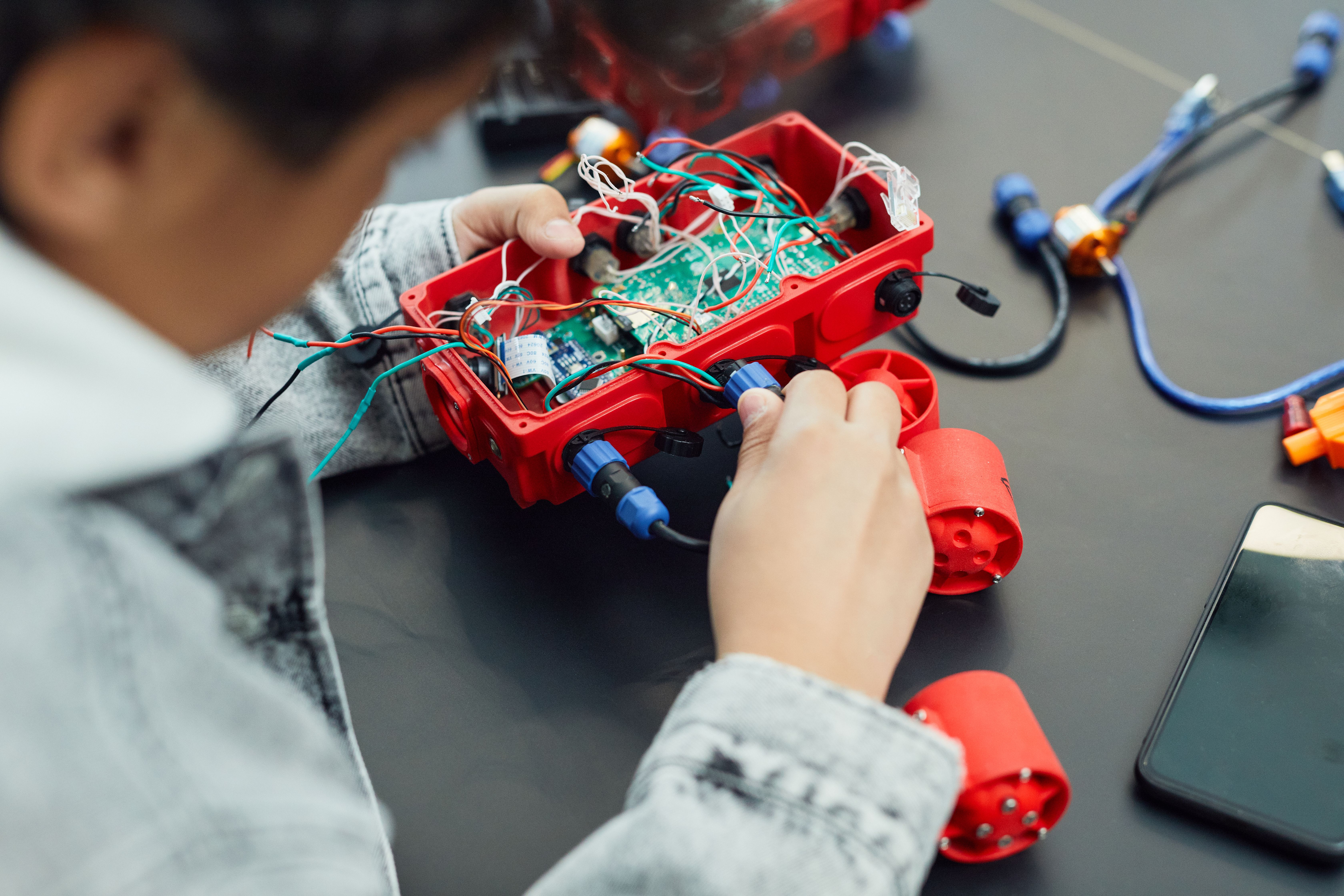
A mother once told us her son spent three sessions trying to make one wheel turn. He didn't give up — he just kept adjusting. That persistence didn't come from a worksheet. It came from a robot that wouldn't move until he figured it out.
We live in an age where children are surrounded by technology they consume but rarely create. They tap, swipe, and scroll — but they don't often ask: how does this actually work? Robotics changes that. It puts the question and the answer in the same pair of hands.
At ScienceUtsav, we've watched hundreds of children between the ages of six and twelve build their first robots. And we've noticed something consistent: the moment a child makes something move — something they assembled, wired, and programmed themselves — their relationship with the world around them shifts permanently.
Most children spend their school years being told about things. They read about electricity. They watch videos about circuits. They memorise the definition of a sensor. But understanding electricity by reading about it is like understanding swimming by studying water.
Robotics is the opposite of passive. A child who assembles a motor, connects it to a battery, and watches it spin has understood electricity more viscerally than any textbook diagram can convey. When the circuit breaks and the motor stops, they have to think — not guess, not memorise — but genuinely reason about what went wrong.
Parents often ask us: is this just play? The short answer is that the best learning always looks like play from the outside. Here is what's actually happening:
Let your child build their first robot — no experience needed.

 Call Now
 Whatsapp